Building the infrastructure of creative excellence.
Great creative work doesn't happen by accident — it's built on systems, people, and the conviction that brand is a business asset. Over twelve years at Optiv I've grown from individual contributor to Director, building the teams, programs, and tools that let a 25-person global creative org deliver consistent, high-impact work at scale.
60%
Increase in proposal win rates
25
Designers across India & the US
100%
Brand trust score, Werk Insight 2024
500
Employees onboarded to Templafy
From a team of 2 to 25.
When I joined Optiv there were two of us. Over the next twelve years I built an in-house creative org from scratch — writing job descriptions, interviewing candidates, and developing junior designers into creative leads and managers.
My approach to leadership is rooted in a simple belief: people do their best work when they feel trusted, challenged, and clear on why their work matters. That's shaped everything from how I run 1:1s to how I structure feedback cycles and set performance expectations.
TEAM BUILDING“Earned top Culture Amp manager feedback scores for employee satisfaction three years in a row across India and the U.S.”
Designing with borders.
Proposal turnaround was a bottleneck. The US team was strong, but Sales cycles don't stop at 5pm. To solve it, I built Optiv's first global creative workforce — recruiting and training 13 designers in Bangalore to work in parallel with our US team using a "follow the sun" production model.
This wasn't just a staffing decision. It required building onboarding programs, quality standards, feedback loops, and a shared culture across nine time zones — so that the work coming out of Bangalore felt as polished and on-brand as anything produced in the US.
GLOBAL WORKFORCEPEP PROGRAM
The Presenting Excellence Program —designing for revenue
Sales proposals are where brand either wins or loses trust. When I looked at our proposal process, I saw inconsistency everywhere — outdated templates, no QA standard, and designers caught in a reactive loop with Sales. I built PEP to fix it: a cross-functional program that consolidated design resources, standardized workflows, and gave Sales a simple, repeatable engagement model.
The program included a global design team structured around proposal cycles, a Design-to-QA process that reduced revisions, Salesforce tooling for Sales engagement, and executive dashboards for leadership reporting. PEP was piloted, refined, and then scaled company-wide.
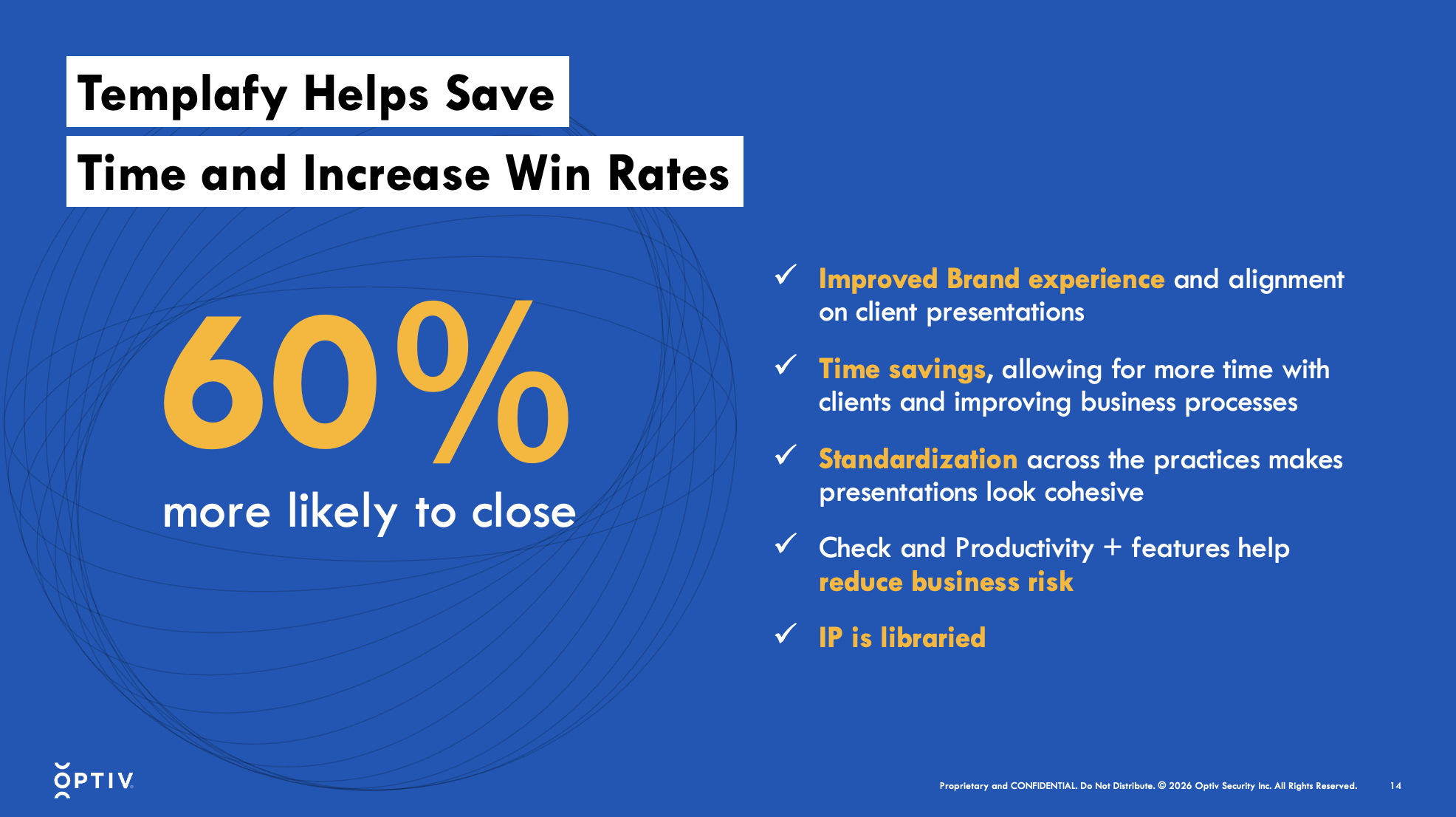
60%
increase in proposal win rates after PEP rollout.
Templafy — embedding brand into employee's workflows
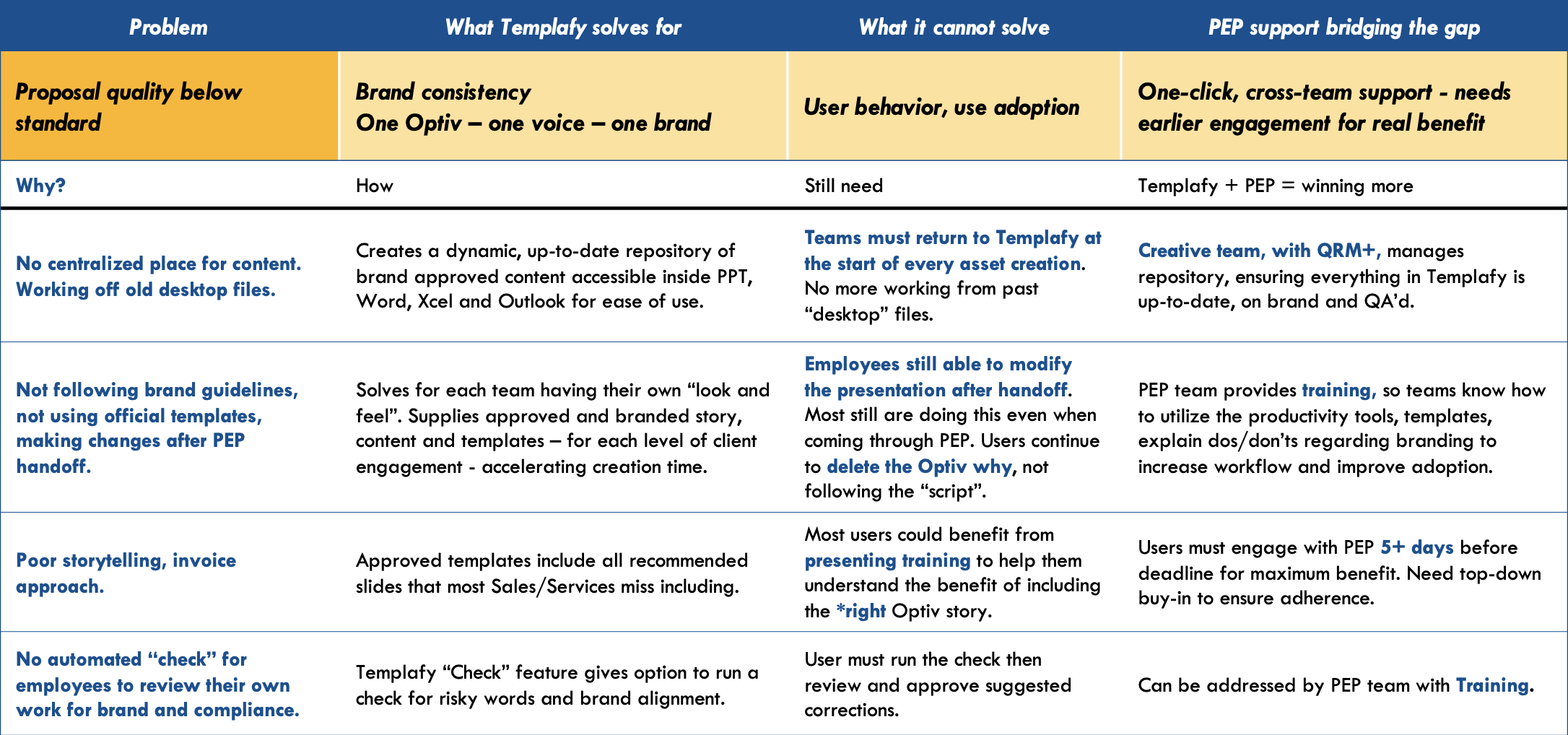
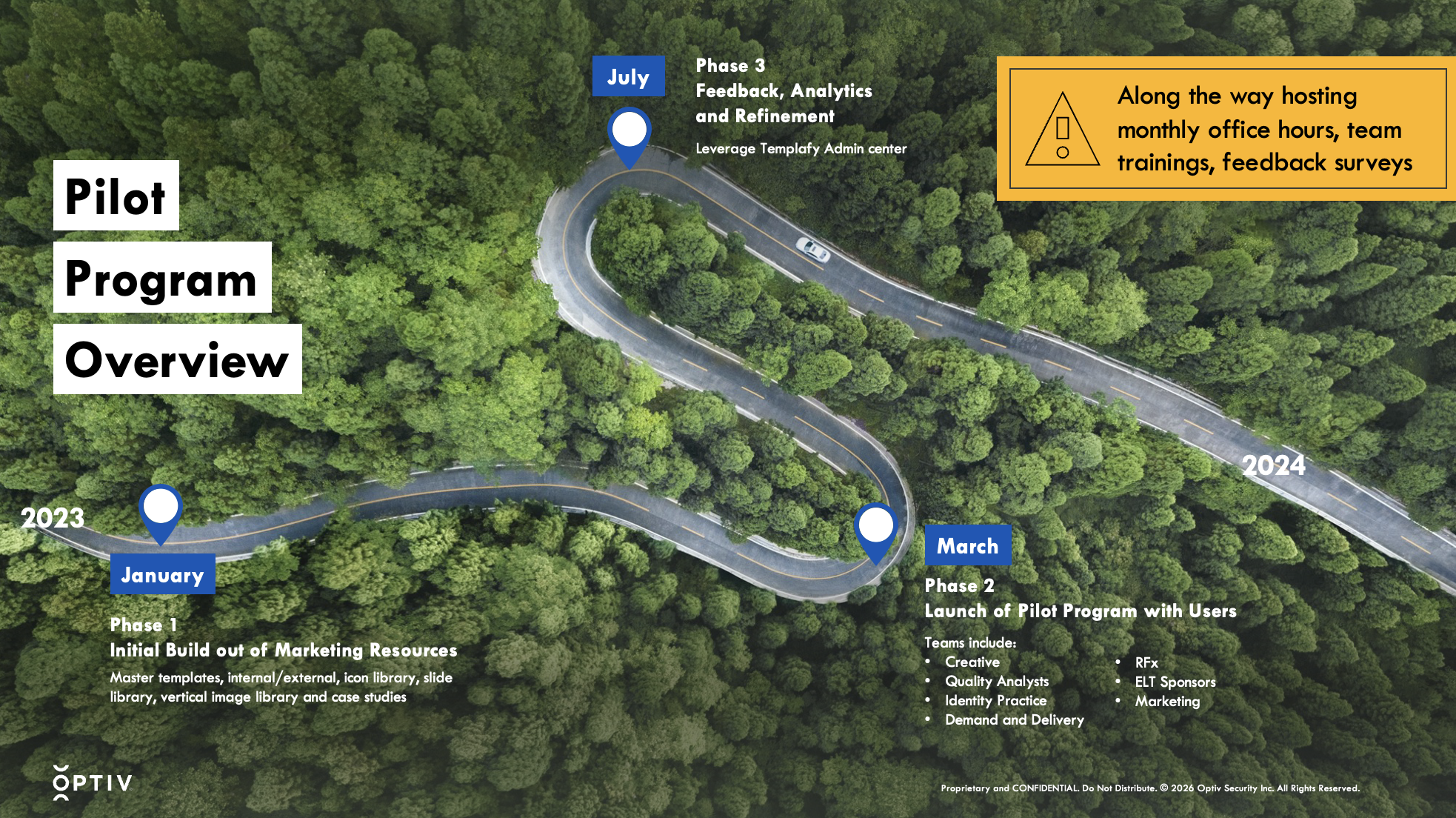
Outdated materials were reaching clients. The problem wasn't that people didn't care about brand — it's that the right assets weren't easy to find at the moment of creation. I built and secured executive approval for the business case to automate proposal production, then led the rollout of Templafy to 500 employees across Sales and Services. Then I built out a team to run the day-to-day platform, provide onboarding, continuous training and ensure Templafy became the trusted source for up to date content across each service line.
By embedding brand resources, templates, and approved content directly inside Microsoft apps, we removed the path of least resistance to off-brand work. The results followed: in a 2024 Werk Insight survey, Optiv ranked as the most-trusted brand among key competitors with a 100% trust score.